
Updated by
Cooper Hale is the founder and editor of FIFO Careers. Based in Sydney, Australia, and in his thirties, Cooper researches FIFO and remote-site careers across mining and resources, construction, renewables, oil and gas, healthcare and electrical trades. His guides draw on current job advertisements and authoritative Australian sources, including Fair Work Commission agreements, ATO guidance, modern awards and Fair Work Ombudsman resources. He aims to provide practical, carefully sourced information rather than opinion or unverified forum advice.
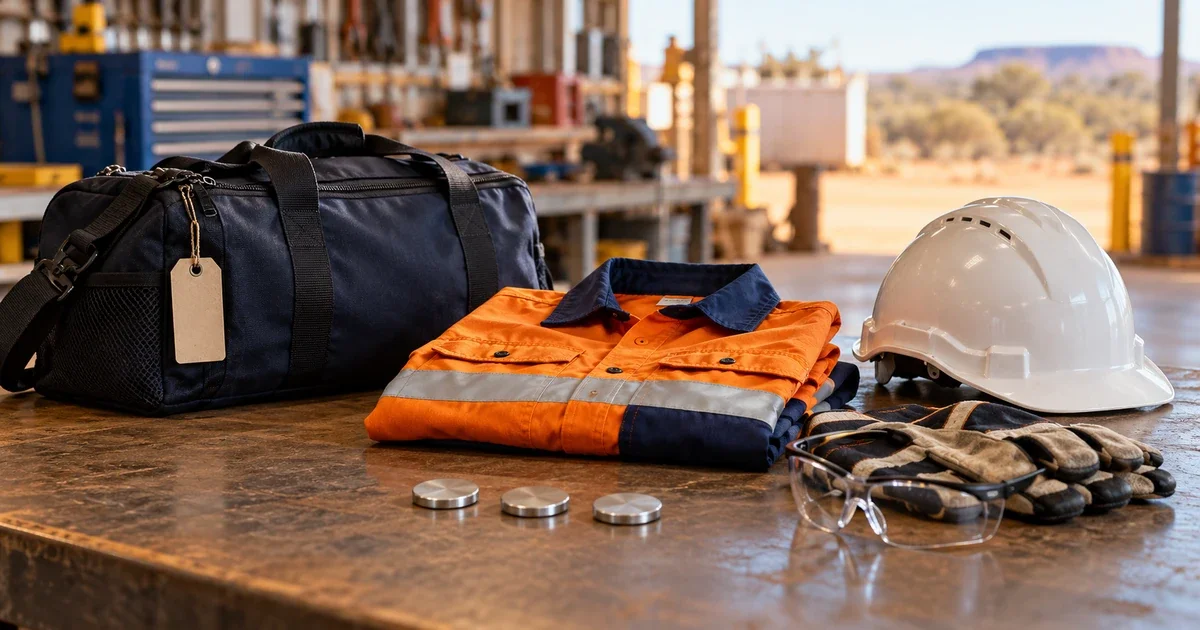
FIFO pay is not one number. In a 30 September 2026 snapshot of all 974 live jobs on FIFO Careers, 162 listings (16.6%) displayed pay: 136 annual, 23 hourly and three daily rates. Because more than five in six listings did not show pay, the figures below are current advertised examples and not a complete salary survey or a promise of earnings.
For a broader benchmark, the Australian Bureau of Statistics reported average weekly ordinary-time earnings of $3,224.20 for full-time adults in mining in May 2026. Annualised, that is about $167,658, but it is an industry-wide figure, not a FIFO average. It excludes overtime and does not tell you what a particular role, roster, employer or site will pay.
What current FIFO job ads disclose about pay
The clearest pattern in current listings is spread, not a single market rate. On 30 September 2026, FIFO Careers ads displayed examples including:
Work area | Advertised examples visible in the snapshot | What the examples do not prove |
|---|---|---|
Village services and utilities | Service-attendant roles from $78,000; a village cleaner at $82,300; utility roles from $87,500 | That all entry-level or hospitality jobs pay within this band |
Chefs and catering | FIFO chef ads around $93,000–$110,000; head-chef ads around $110,000–$130,000 | That titles, duties, qualifications, rosters or inclusions are equivalent |
Operators, drivers and stores | A warehouse operator at $115,000–$125,000; a shotfirer at $129,600–$158,400; an open-cut operator at $147,000–$170,000; a dragline operator from $210,500 | That a new operator can enter at the specialist end of the range |
Mechanical trades | Mechanical fitter examples at $190,000–$220,000 and specialist heavy-diesel examples from $177,000 or up to $230,000 | That every fitter role has the same equipment, experience or site requirements |
Electrical and refrigeration trades | Electrician and refrigeration examples from $117,000 to $149,000; specialist high-voltage examples from $177,000 to $230,000 | That a general electrical role is comparable with an autonomous-haulage or high-voltage specialist role |
These are examples as displayed on FIFO Careers job posts.. We excluded ambiguous or apparently malformed pay labels rather than interpreting them. Listings can also close or change, so use the live FIFO salary directory and FIFO jobs board for current options.
National ABS benchmarks
The ABS mining figure is a valuable sense-check because it is current, Australian and methodologically defined. In May 2026, average weekly ordinary-time earnings for full-time adults in mining were $3,224.20, compared with $2,083.70 across all industries. That does not mean an average FIFO worker earns $167,658.
Mining includes metropolitan and residential roles as well as remote work. “Ordinary time” excludes overtime. The figure also blends occupations, seniority levels and employment arrangements.
How to read an advertised FIFO salary
Before comparing two headline numbers, check what each number includes:
Base salary or total package: Is superannuation additional, or already included?
Guaranteed or variable earnings: Are bonuses, site allowances, night shift, overtime or production incentives guaranteed?
Pay unit: An hourly or daily rate needs paid-hours and paid-days assumptions before it can be compared with an annual salary.
Employment basis: Permanent, fixed-term and casual rates are not like-for-like. A casual loading does not create paid annual leave.
Roster and shift length: The same annual salary can require very different numbers of workdays and nights away.
Travel: Confirm the point of hire, who pays flights or ground transport, and whether travel time is paid.
Accommodation and meals: Do not assume they are included just because a role is FIFO.
Applicable industrial instrument: An award, enterprise agreement or employment contract can change overtime, penalty and allowance treatment.
The Fair Work Ombudsman's Pay and Conditions Tool can help identify minimum pay rates and common entitlements. It is still important to check the instrument and contract that apply to the actual role.
How the roster changes the value of an offer
A roster changes how much time you exchange for the salary. For 12-hour shifts, the on-swing hours alone would be:
Roster | On-swing hours per cycle | Work pattern |
|---|---|---|
8 days on, 6 off | 96 hours per 14-day cycle | More even time at home than a 2:1 roster |
2 weeks on, 1 off | 168 hours per 21-day cycle | More rostered workdays across the year |
2 weeks on, 2 off | 168 hours per 28-day cycle | Even-time roster, subject to travel and shift arrangements |
This is only a comparison aid. It is not a calculation of ordinary hours, overtime or legal entitlements. Leave, travel, public holidays, shift changes and the applicable award or agreement can alter paid hours.
For a quick screening comparison, divide guaranteed annual cash pay by approximate rostered workdays. For example, $130,000 on an 8:6 pattern is about $623 per rostered workday, while $150,000 on a 2:1 pattern is about $616. The apparently higher annual offer is not automatically the better time-for-pay trade. This simple calculation still ignores super, overtime, allowances, leave, travel and tax.
See the full guide to common FIFO rosters, including questions to ask before accepting a schedule.
Which FIFO roles can advertise more than $200,000?
Some current FIFO Careers ads displayed more than $200,000 for specialist mobile-plant electrical work, heavy-diesel fitting, mechanical fitting, dragline operation and MC driving. These were role-specific examples, not entry-level benchmarks.
Higher advertised pay commonly appears alongside one or more of the following:
scarce or high-risk technical capability;
trade qualifications or specialist licences;
experience on particular mobile or fixed plant;
supervisory responsibility;
longer or less family-friendly rosters;
remote or hard-to-fill locations; and
casual, contract or project-based employment.
The job description matters more than the title alone. Compare current mining maintenance jobs, mining operator jobs and chef jobs to see how requirements and rosters differ.
Can a first FIFO job pay six figures?
Many FIFO jobs can, but it is not a safe expectation. Some service, chef, operator and trade ads in the snapshot reached or exceeded $100,000. A person entering FIFO for the first time may still start below that level, especially without directly relevant experience, a trade or site-specific capability.
Do not buy unnecessary tickets based on a generic checklist. Requirements vary by occupation, employer, site and state or territory. Start with live job ads for the role you can credibly do, note the requirements that repeat, then verify them with the employer or the relevant Australian authority. The guide to getting a FIFO job with no experience explains that process.
Super, overtime and allowances: what to confirm
The general super guarantee rate is 12% in the 2026–27 financial year. A job ad may quote salary plus super or a package including super, so the same headline number can represent different cash pay. Ask for the breakdown in writing.
Also confirm whether the advertised figure assumes a standard roster, regularly worked overtime, night shift, a site allowance or a performance bonus. The Fair Work Ombudsman notes that minimum pay, penalties, allowances and overtime depend on the applicable workplace rules. General information cannot replace advice about your individual contract or entitlements.
A seven-question FIFO offer check
Before accepting, ask:
What is the guaranteed base cash salary or hourly rate?
Is super additional, and what earnings is it calculated on?
Which award, enterprise agreement or contract governs the role?
What roster, shift length and annual paid hours does the offer assume?
Which allowances, penalties, bonuses or overtime are guaranteed?
Who pays travel from the nominated point of hire, and is travel time paid?
Are accommodation, meals, leave and income-protection arrangements included?
Then compare the written answers, not just the largest number.
Where to compare current FIFO pay
For current opportunities, browse all FIFO jobs. For durable role, company, skill and location views, use the FIFO Careers salary directory. Both change as employers add and close listings.
Sources and methodology
FIFO Careers public jobs inventory: all 49 results pages parsed and deduplicated by public job ID on 30 September 2026 (Australia/Sydney). The snapshot contained 974 jobs; 162 displayed usable pay information. Category counts can overlap because one job can carry several categories.
Australian Bureau of Statistics, Average Weekly Earnings, Australia, May 2026, released 13 August 2026.
Australian Taxation Office, Super guarantee percentage, updated 17 April 2026.
Fair Work Ombudsman, Pay and wages, checked 30 September 2026.
This article provides general information only. Pay, rosters, requirements and entitlements vary by role, employer, site, industrial instrument and jurisdiction. It is not individual legal, financial or employment advice, and it does not guarantee a job or level of earnings.
Related posts

A practical ATO-first guide to FIFO travel, PPE, tools, training, records and common tax-deduction myths for Australian workers.
Understand FIFO apprenticeships and traineeships with original job-ad research, real program comparisons and the questions to ask before applying.
Understand White Card, heights, first aid, confined spaces, forklift and driver licences, then choose training that matches your target FIFO role.