Updated by
Cooper Hale is the founder and editor of FIFO Careers. Based in Sydney, Australia, and in his thirties, Cooper researches FIFO and remote-site careers across mining and resources, construction, renewables, oil and gas, healthcare and electrical trades. His guides draw on current job advertisements and authoritative Australian sources, including Fair Work Commission agreements, ATO guidance, modern awards and Fair Work Ombudsman resources. He aims to provide practical, carefully sourced information rather than opinion or unverified forum advice.
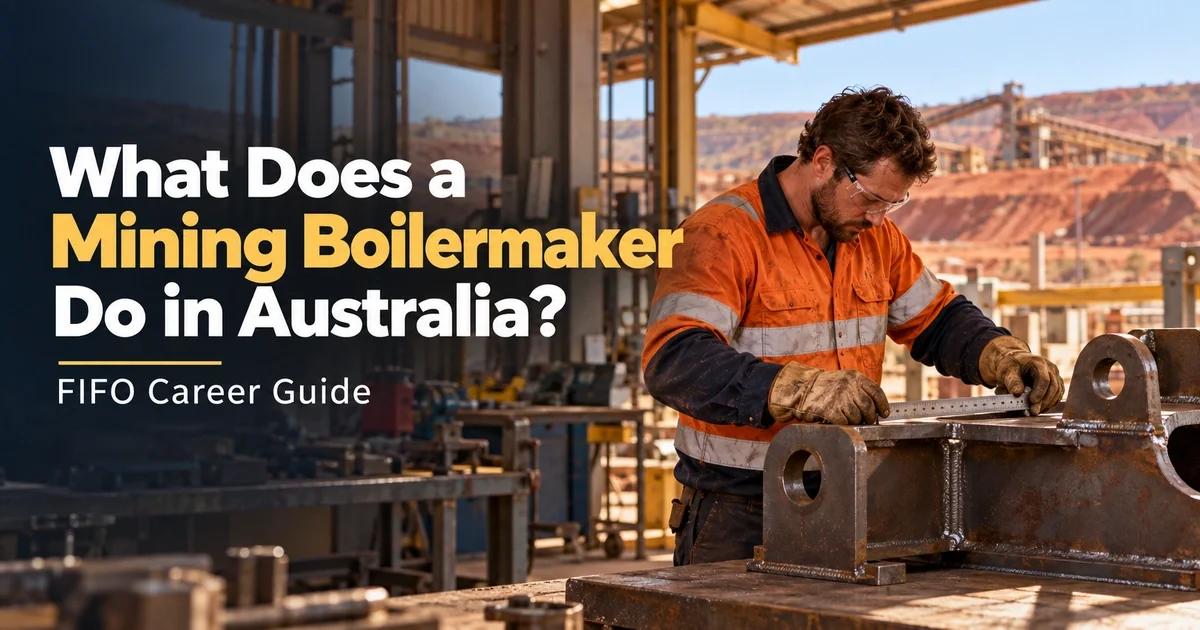
A mining boilermaker works on the metal components that keep equipment and infrastructure serviceable. Depending on the role, that could mean repairing mobile machinery, maintaining a processing plant or completing fabrication and structural work during a shutdown.
If you are considering FIFO work, compare the equipment and duties before the roster or headline pay. This guide explains the differences, what to check in an ad and how to show relevant experience in an application.
What does a mining boilermaker actually do?
A mining boilermaker fabricates, repairs and maintains metal components used in mining equipment and infrastructure. The work can involve reading drawings, measuring and preparing material, fitting components together, welding, checking the finished work and recording what was done.
Welding is part of the trade, but the job extends beyond making a weld. You may need to interpret the repair scope, identify damage, prepare a component and work with other trades to complete a maintenance task. TAFE SA's boilermaker and welder profile explains that broader fabrication role.
In mining, the equipment matters more than the title. Repairing a haul-truck tray is different from maintaining a processing plant or installing structural supports during a shutdown. Start by asking: what equipment will I work on, and what experience does this team need?
Mobile equipment, fixed plant or shutdowns: which work fits?
These are useful ways to read an ad, rather than separate trades with identical requirements everywhere. A fixed-plant position may include shutdowns, and a mobile-equipment role may combine workshop and field work.
Mobile equipment maintenance
Mobile equipment maintenance, often shortened to MEM, focuses on equipment such as haul trucks, excavators, loaders and dozers. Work can include structural repairs, replacing wear plates and rebuilding buckets or trays.
For example, an FMS Group MEM boilermaker ad on FIFO Careers describes crack repairs, reinforcement, equipment modifications and work on heavy mobile equipment. It asks for previous mining experience on heavy equipment.
Check your fit: can you describe the equipment, materials and repair work you have actually handled? Ask how much of the role is workshop work, breakdown response or field service. Schlam's MEM role explainer provides further equipment examples; its 2023 pay and qualification details should not be treated as current requirements.
Fixed plant maintenance
Fixed plant roles support a mine's processing facilities. The work may include planned maintenance, repairs, inspections and shutdown activities, with a focus on keeping equipment reliable.
A Northern Star fixed plant boilermaker ad describes scheduled and unscheduled process-plant maintenance, shutdown work, records and work requests following inspections.
Check your fit: show evidence of plant maintenance, inspection reporting and coordination with other trades. Ask which plant areas you will cover and how work is planned and handed over.
Shutdown and project work
Shutdown or project roles can involve a defined repair, upgrade or installation scope. Read the employment arrangement carefully: the word shutdown does not tell you whether the job is casual, ongoing or tied to particular dates.
A Duratec boilermaker/welder ad describes structural supports, fabrication, maintenance, engineering drawings, welding procedures and sign-off documentation for Pilbara projects.
Check your fit: can you demonstrate the specified welding capability and work to drawings? Ask about confirmed dates, mobilisation, expected gaps between assignments and who supplies tools.
These ads were reviewed on 2 October 2026. They are examples of how duties differ, not promises that the positions will remain available. Use the boilermaker jobs page for current listings.
How do you become qualified for boilermaker work?
If you are new to the trade, investigate a boilermaking apprenticeship rather than treating a short welding course as equivalent to trade qualification. MEGT's apprenticeship guide describes a nominal four-year pathway combining employment and formal training. Confirm the training plan and duration with the employer and registered training organisation (RTO).
As checked on 2 October 2026, the national register lists MEM31925 Certificate III in Engineering – Fabrication Trade as current, with boilermaking and boilermaking/welding specialisations. Its qualification document specifies a training contract or formal trade recognition assessment process.
The qualification lists no entry requirements; employers and training providers may set their own selection criteria. Ask the RTO which specialisation and workplace training arrangement fit your intended work.
If you already hold a fabrication trade qualification, ask the employer what recognition evidence it accepts. An older course code in your records is a reason to clarify recognition, rather than assume you must repeat an apprenticeship.
For broader entry options, see how to get a FIFO job with no experience. Qualified mining vacancies and apprentice vacancies are different application targets.
What should you check in a FIFO boilermaker job ad?
Separate requirements into essential, desirable and unclear. If something essential is missing from your experience, check with the recruiter before spending money on training or presenting yourself as qualified for it.
- Trade recognition: what certificate or evidence is accepted?
- Equipment experience: does the ad require previous mining, mobile-equipment, fixed-plant or structural work?
- Welding capability: which processes, procedures or practical tests are specified?
- Tickets and licences: which are required for this task and site, what currency is accepted, and what does the employer arrange?
- Screening: what medical, drug and alcohol, police or right-to-work checks does this employer require?
The Duratec example requires welding to a 3G/4G procedure and lists 6G as desirable. Those distinctions belong to that ad; they are not a universal FIFO boilermaker standard. The FMS and Northern Star examples also specify trade recognition, experience and screening criteria. Requirements vary by role, employer, site and jurisdiction. Read our pre-employment medical guide for general preparation, then follow the employer's instructions.
Safety questions belong in your research too. Safe Work Australia explains that welding fumes are hazardous and that their composition depends on the process, materials and coatings. Ask how the employer controls fume exposure, what training and protective equipment it provides, and how workers raise concerns. Its model welding code is a starting point; check the relevant regulator for its legal effect locally.
Use this guide to assess a career move. Site procedures, task-specific training and supervision govern how the work is performed.
How to show your experience in an application
Make your resume answer the equipment and task questions in the ad. A list that says welding, fabrication and safety gives a recruiter less to assess than a clear description of work you completed.
Useful evidence includes:
- your trade qualification and relevant, current licences or training;
- equipment or structures you have worked on;
- welding processes and materials you can accurately claim;
- experience reading drawings and following specified procedures;
- inspection, quality records and maintenance handovers;
- referees who can confirm the relevant work.
Illustrative resume bullet — adapt only if true:
Fabricated and repaired mild-steel frames in a maintenance workshop, working from engineering drawings and completing dimensional checks and job records before handover.
That example demonstrates task, setting and quality evidence without inventing mining experience. If your background is workshop fabrication, say so and explain the relevant skills. Do not relabel it as heavy mining equipment experience.
For a MEM application, lead with genuine heavy-equipment repairs if you have them. For a plant role, bring maintenance and inspection examples forward. For project work, highlight drawings, specified welding procedures and completed documentation. Follow your employer's confidentiality rules when sharing work samples or photographs.
Use the FIFO resume guide to organise the application, and prepare examples using the mining interview guide.
Before you accept: questions that change the decision
A familiar job title does not settle whether the work or FIFO arrangement will suit you. Get clear answers to these questions before committing:
- What will I work on? Confirm the equipment, plant areas and balance of fabrication, repairs and inspections.
- Which skills are essential from day one? Ask about tests, recognition of your trade and training support.
- What is the actual roster? Confirm day/night shifts and whether the arrangement is fixed or changes between assignments.
- Where does employer-arranged travel begin? Identify the departure point and any travel you must organise yourself.
- What employment arrangement is offered? Confirm the employer, employment type, expected duration and any gaps between projects.
- How is pay calculated? Ask about the rate's unit, super, overtime, allowances and paid travel in the written offer.
- What happens on site? Confirm accommodation, tools, induction, supervision and arrangements for reporting safety concerns.
- What happens if plans change? Ask who handles changed mobilisation dates, roster changes or cancelled work.
Our roster guide, salary comparison guide and travel-day pay guide explain the broader checks. The written terms for your particular role need to resolve the details.
Your next step: view current boilermaker jobs on FIFO Careers. Shortlist ads by equipment and work setting, then compare their essential requirements with evidence you can honestly provide.
Related posts
A dated analysis of 974 live FIFO Careers jobs, including 162 disclosed pay rates, current role examples, roster comparisons and an offer-checking guide.
Compare fixed plant, NPI and underground mining electrician work, then check licences, job requirements, rosters and FIFO fit before applying.
Learn what mining surveyors do in Australia, how open-pit and underground roles differ, and what to check before applying for FIFO work.