Updated by
Cooper Hale is the founder and editor of FIFO Careers. Based in Sydney, Australia, and in his thirties, Cooper researches FIFO and remote-site careers across mining and resources, construction, renewables, oil and gas, healthcare and electrical trades. His guides draw on current job advertisements and authoritative Australian sources, including Fair Work Commission agreements, ATO guidance, modern awards and Fair Work Ombudsman resources. He aims to provide practical, carefully sourced information rather than opinion or unverified forum advice.
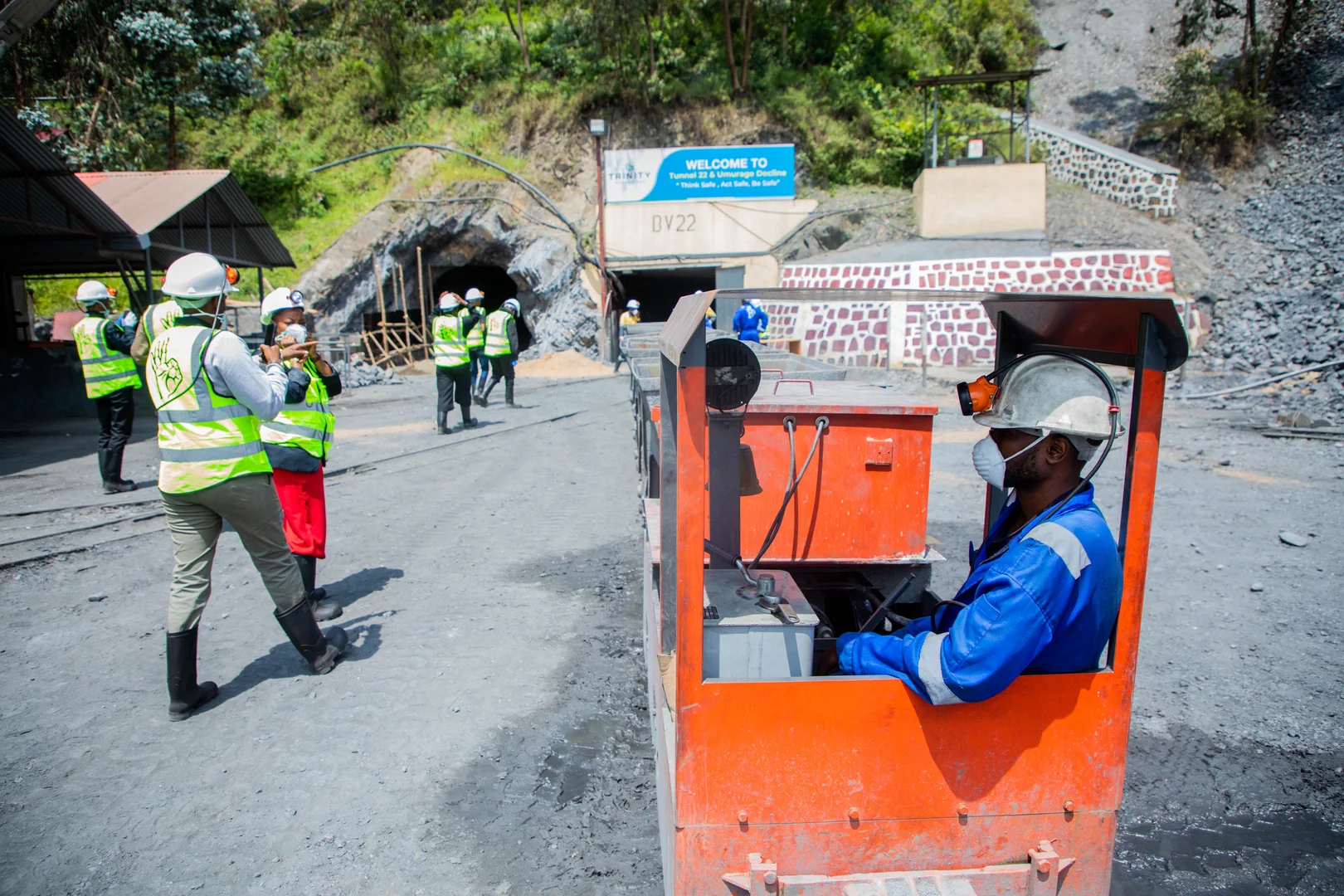
A mining engineer plans and controls how a mineral deposit can be mined safely, practically and economically. The work can include choosing an extraction method, designing mine layouts, preparing production schedules, coordinating people and equipment, monitoring risk, and comparing the plan with what actually happened.
That broad description hides several different careers. A production engineer solving today's operating constraints, a short-term planner preparing next week's sequence and a long-term planner testing a future mine design may all hold mining-engineering qualifications, but their priorities and workdays are different.
This guide explains the main role families, what site and FIFO work can involve, the usual Australian qualification checks and how to work out what a vacancy really expects. A current job advertisement and the employer remain the authority for a particular position.
What a mining engineer actually does
Jobs and Skills Australia describes mining engineers as professionals who plan and direct the engineering aspects of locating and extracting resources. Its task profile includes evaluating deposits, selecting extraction methods, preparing layouts and schedules, estimating costs, assessing risk, and coordinating labour and equipment.
In an operating mine, that work can be understood as a repeating loop:
- Understand the constraints: review geological, survey, geotechnical, equipment, environmental, regulatory and operating information relevant to the decision.
- Design the work: prepare a layout, sequence, schedule or technical instruction for the required planning horizon.
- Coordinate execution: explain the plan to operations and other technical disciplines, then resolve questions within the role's authority.
- Monitor performance and risk: check whether conditions, production and costs are tracking against the plan and whether assumptions remain valid.
- Reconcile and improve: compare the design with actual outcomes, record changes and feed what was learned into the next plan.
Not every engineer owns every step. Responsibilities depend on the mine type, commodity, project stage, team structure, statutory appointments and the engineer's experience.
Common mining-engineering role families
Job titles overlap between employers, so compare the decision being made and its time horizon rather than relying on the title alone.
| Role family | Main question | Typical outputs may include | Vacancy evidence to look for |
|---|---|---|---|
| Production or operations engineering | What must happen safely and practically on the current shift or in the next few days? | Daily plans, production instructions, performance review, issue resolution and handovers | Mine type, frontline interaction, shift pattern, reconciliation and communication requirements |
| Short-term planning | What sequence should the mine follow over the coming weeks or months? | Designs, schedules, equipment assumptions, priorities and plan updates | Planning horizon, scheduling software, open-pit or underground experience and interfaces with operations |
| Medium- or long-term planning | Which mine design and sequence best supports future production and project value? | Life-of-mine designs, scenarios, schedules, reserves inputs and strategic studies | Design scope, evaluation methods, reporting level and required technical review experience |
| Drill-and-blast engineering | How should drilling and blasting be designed and reviewed for this operation? | Patterns, charging or timing inputs, blast plans, performance review and reconciliation | Mine and rock context, applicable competencies, site procedures and boundaries of technical authority |
| Technical services or projects | How should a defined study, improvement or development be delivered? | Options analysis, budgets, schedules, technical reports and cross-discipline coordination | Project stage, deliverables, contractor interfaces and decision authority |
| Geotechnical or ventilation engineering | How should ground behaviour or mine-air requirements be assessed and managed? | Monitoring plans, designs, inspections, analysis and technical advice | The exact specialist qualification, experience, registration or statutory requirements in the ad |
The last row contains adjacent specialist roles, not proof that every mining engineer is qualified to perform them. Current FIFO Careers listings use distinct titles such as production, planning, geotechnical and ventilation engineer. Treat the duties and mandatory criteria in each advertisement as the boundary.
What can a mining engineer's workday look like?
A site-based day may begin with a handover or technical-services meeting. The engineer could review production results, survey pickups, geological updates, equipment availability, hazards and changes that affect the current plan.
Depending on the role, the day may then include:
- inspecting a pit, underground heading, stockpile area or planned work location under the site's access controls
- updating a design or schedule in specialist software
- checking whether development or production is tracking against plan
- discussing constraints with geologists, surveyors, geotechnical staff, operators, maintenance teams and supervisors
- documenting assumptions, changes, risks and decisions
- preparing plans, instructions, reports or the next shift's handover
A production engineer may be interrupted by immediate operating issues. A planner may spend a larger share of the day modelling alternatives and checking data. A consultant may move between studies and client sites. AusIMM's mining-engineering pathway similarly distinguishes operational mine roles from consulting and research work and notes that strategic planning can occur away from site.
Before applying, ask what percentage of the role is field inspection, design, scheduling, reconciliation, reporting and meetings. Two jobs with similar titles can build very different experience.
Does mining engineering always mean FIFO?
No. Mining engineers can work FIFO, DIDO, residential at or near a mining town, from a city office, or in consulting roles that combine office work with site visits. The arrangement depends on the location, employer, project and position.
For a site-based vacancy, check:
- the point of hire and who pays for travel from that point
- whether the role is genuinely FIFO, DIDO or residential
- the roster, shift length and whether night shift is part of the role
- travel time between home, airport, camp and site
- accommodation arrangements and whether the role moves between sites
- how much site attendance is required outside the normal roster
Do not infer these details from the employer's industry or from the word “remote”. If the terminology is unfamiliar, compare FIFO, DIDO and BIBO work arrangements before assessing the offer.
How to become a mining engineer in Australia
The usual entry pathway is a Bachelor of Engineering with a mining-engineering major or another qualification accepted for the role. Course names and accreditation status vary, so check the exact program rather than assuming that any engineering degree leads to the same graduate pathway.
- Compare accredited programs. Engineers Australia publishes a current accredited-program search and list. Check the program, campus, commencement year and accreditation status that apply to you.
- Build evidence during study. Fieldwork, design projects, vacation placements, laboratories, team projects and data analysis can show how you approached technical problems. Describe them accurately; university work is not professional mine-site experience.
- Target graduate or vacation roles at the right level. Read current advertisements early so you understand the mine types, software exposure, relocation and work arrangements employers are asking for.
- Develop supervised professional experience. Graduate programs and early-career roles can expose you to operations, planning and technical services, but the rotation and progression structure varies by employer.
- Check registration for the work location and services. Engineering registration is not one national rule. Engineers Australia states that requirements vary by state and territory and places the responsibility on engineers to check the relevant authority.
Registration, a professional credential and an employer's hiring decision are separate matters. Site inductions, medical or drug and alcohol screening, right-to-work evidence, licences and other mobilisation requirements also vary. Only treat an item as mandatory when the current advertisement, employer or relevant authority makes it so.
Skills that matter beyond technical software
Software matters, but employers are not hiring a list of package names. They need an engineer who can use reliable inputs, recognise limits, explain a plan and learn from actual outcomes.
- Spatial and systems thinking: connecting geology, mine geometry, equipment, time and access constraints.
- Quantitative checking: testing units, assumptions, sensitivities and whether outputs are plausible.
- Risk communication: explaining uncertainty and escalation points without hiding them in technical language.
- Operational judgement: understanding how a technically valid design will be executed by people and equipment.
- Documentation and handover: leaving a clear record of inputs, changes, decisions and outstanding issues.
- Collaboration: working constructively with geology, survey, geotechnical, ventilation, processing, maintenance and operations teams.
Never claim competence with software, mine types or statutory responsibilities you have not used. For an early-career application, a smaller truthful example of checking data, explaining assumptions or improving a team design is stronger than an inflated skills list.
How to read a mining-engineer job ad
Use the advertisement to identify the role's real centre of gravity before tailoring an application.
| Ad signal | What it changes | What to verify or prepare |
|---|---|---|
| Production, short-term, long-term or projects | The decision horizon and pace of work | A relevant example of planning, prioritising, reviewing or coordinating work |
| Open pit, underground, coal, hard rock or another operation type | The methods, hazards, terminology and experience context | Whether the mine-type experience is mandatory or preferred; do not claim equivalence without evidence |
| Graduate, engineer, senior, principal or statutory title | Expected independence, review responsibility and authority | Examples that match the advertised level, plus any registration or appointment requirement |
| Named design or scheduling software | The tools used to produce and communicate work | Your actual level of use, version/context if relevant and how you checked the output |
| Drill-and-blast, geotechnical or ventilation scope | Specialist work and possible competency boundaries | Exact qualification, experience and jurisdiction/site criteria in the ad |
| FIFO, DIDO, residential or site/corporate split | Travel, living arrangements and site exposure | Point of hire, roster, nights, travel time, accommodation and required site attendance |
| “Work with operations” or “influence stakeholders” | The role depends on implementation, not design alone | A concise example of explaining a technical issue and reaching a safe, workable decision |
On 19 July 2026, the FIFO Careers marketplace showed separate routes for mining engineering, mine planning, production engineering, underground mining engineering, geotechnical engineering and ventilation engineering. That taxonomy is useful for exploring titles, but listings change and the individual advertisement is the source for current requirements.
Is mining engineering likely to suit you?
The career may suit you if you like making defensible decisions from imperfect information, checking detailed technical work and seeing how a plan performs in the field. You also need to be comfortable asking questions, documenting changes and working with people whose priorities differ from your own.
Look more carefully before committing if you only want office design with no site exposure, dislike having your assumptions tested against operational results, or are choosing the career solely because you expect a particular salary or roster. Some roles are heavily site-based; others are more analytical. Neither pattern is guaranteed for an entire career.
If you are deciding between disciplines, a mining geologist focuses more on understanding and modelling the deposit, while a mining engineer focuses more on designing and controlling how extraction is carried out. The two professions work closely, but one is not a shortcut into the other.
Your next step
Choose the action that matches your stage:
- Still choosing a course: compare mining-engineering subjects, field components, graduate outcomes and the exact Engineers Australia accreditation record.
- Student or graduate: read several current graduate and entry-level advertisements, then map each important criterion to a truthful project, placement or work example.
- Experienced engineer: compare the advertised mine type, planning horizon, technical authority, software, registration requirements and work arrangement with your actual record.
Browse current Mining Engineering jobs on FIFO Careers. Listings change, so verify every requirement in the current advertisement and with the employer.
When you are ready to apply, use the FIFO resume guide to connect the job's important criteria to specific evidence rather than repeating generic responsibilities.
Related posts
Compare FIFO work pros and cons with dated pay examples, roster trade-offs and practical checks for fatigue, relationships, tax and annual leave.
Compare mobile equipment, fixed plant and shutdown boilermaker work, check qualifications and prepare evidence for your next FIFO application.
A dated analysis of 974 live FIFO Careers jobs, including 162 disclosed pay rates, current role examples, roster comparisons and an offer-checking guide.