Updated by
Cooper Hale is the founder and editor of FIFO Careers. Based in Sydney, Australia, and in his thirties, Cooper researches FIFO and remote-site careers across mining and resources, construction, renewables, oil and gas, healthcare and electrical trades. His guides draw on current job advertisements and authoritative Australian sources, including Fair Work Commission agreements, ATO guidance, modern awards and Fair Work Ombudsman resources. He aims to provide practical, carefully sourced information rather than opinion or unverified forum advice.
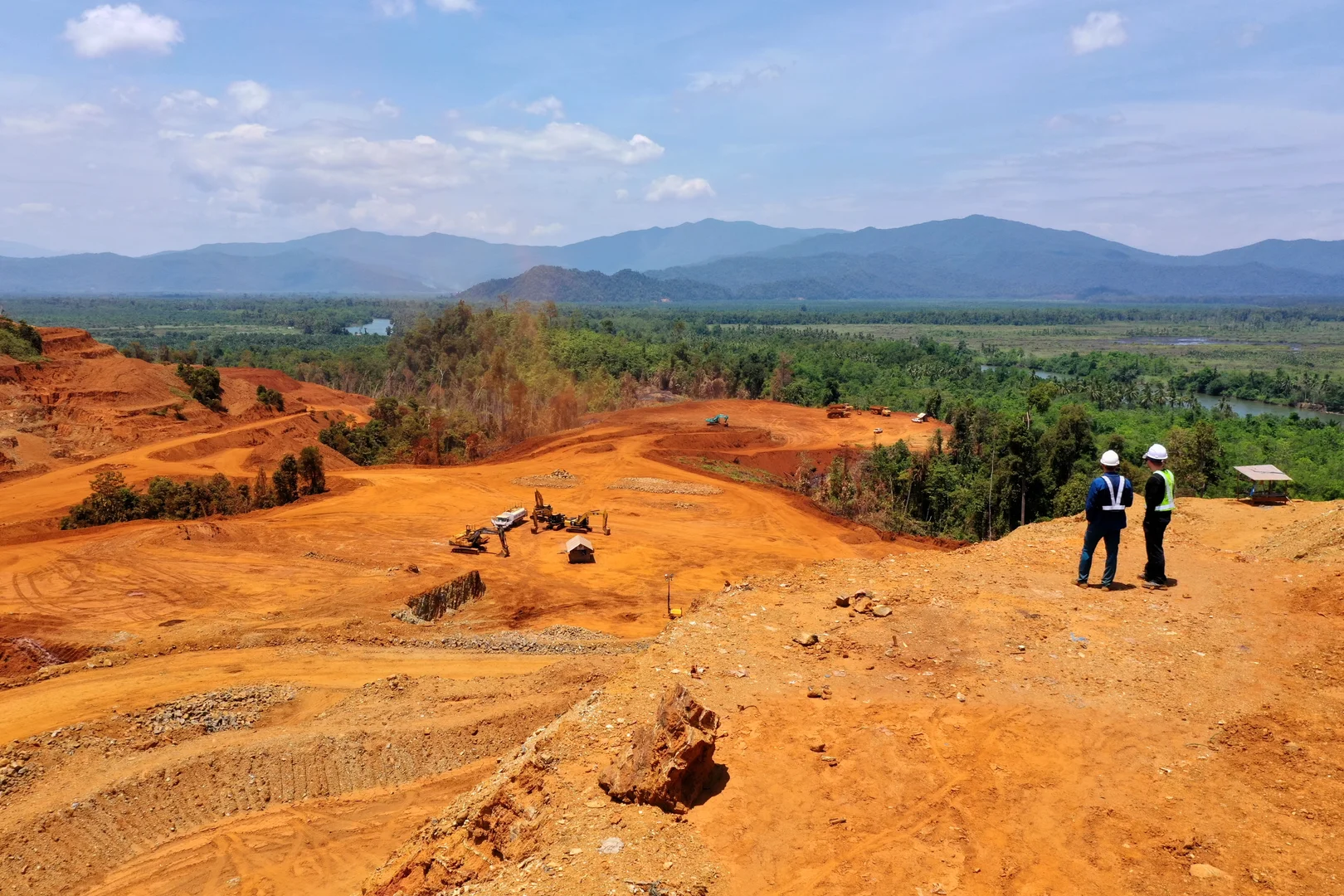
A mining geologist turns information about rocks, structures, mineralisation and samples into decisions about where to explore, how to define a resource and how to separate ore from waste during mining.
The job is not one standard role. An exploration geologist planning drilling, a mine geologist supporting daily production and a resource geologist maintaining a geological model may share a discipline but spend their shifts very differently. The commodity, deposit, mining method, project stage, team and work location all change the duties.
This guide explains the main role types, typical work, study and experience pathways, FIFO realities and questions to ask before applying. Current advertisements and the employer remain the authority for a particular vacancy.
Where mining geologists fit in the mining cycle
Jobs and Skills Australia describes geologists as professionals who study the earth's composition and structure, locate resources and advise on extraction. In mining, that broad work can extend from early exploration to operating mines and rehabilitation.
A simplified project sequence looks like this:
- Regional exploration: review existing information, map geology and identify targets.
- Target testing: plan field programs, drilling and sampling to test geological ideas.
- Resource definition: interpret results and build a model of the deposit's location, geometry and grade distribution.
- Mine planning: provide geological information used alongside engineering, metallurgical, environmental and economic work.
- Production: help identify and track ore and waste as mining progresses.
- Reconciliation and learning: compare forecasts with what was mined and processed, then update interpretations and models.
- Closure and rehabilitation: contribute geological and environmental information where the role requires it.
Not every geologist works across every stage. Large organisations may divide these activities among specialised teams, while a smaller exploration program may give one geologist a broader mix.
Mining geologist role types compared
Job titles overlap, so read the duties rather than relying on the title alone.
| Role type | Main question | Typical work may include | Work pattern may lean towards |
|---|---|---|---|
| Exploration geologist | Where should the team look or drill next? | Mapping, sampling, target generation, drill planning, contractor coordination and interpreting new results | Field campaigns, core sheds, travel and office interpretation |
| Mine or production geologist | What material is being mined now, and where should it go? | Face or pit mapping, drill/sample review, ore-mark-up, grade control and short-term geological interpretation | Operating-site work close to production schedules |
| Resource geologist | What is the current geological and resource model? | Data validation, interpretation, domaining, 3D modelling, estimation support and model updates | Computer-based technical work with site/data interaction |
| Project geologist | How should a particular program be delivered? | Planning work, supervising field/drilling programs, reviewing data, budgets, contractors and reporting | A mix of coordination, field and interpretation |
| Geotechnical geologist | How does the rock mass affect ground behaviour? | Structural mapping, core logging and geological input into ground assessments | Field/site observations plus technical analysis |
| Hydrogeologist | How does groundwater affect the project? | Monitoring, sampling, modelling and advice on groundwater or dewatering | Field monitoring and technical work |
These are general distinctions, not protected boundaries. A job advertised as “mining geologist” could emphasise grade control, drilling, modelling, reconciliation or team supervision. Ask what proportion of the role belongs to each activity.
What does a mining geologist do during a shift?
A site-based shift may start with a production or technical-services meeting. The geologist might review the mining plan, recent drilling, sample results, blast information or changes observed in the pit or underground workings.
Depending on the role, the day could include:
- inspecting and mapping exposed geology
- logging drill core or chips using the site's procedures
- checking sample intervals, labels, records and chain-of-custody steps
- reviewing laboratory results and quality-control information
- updating sections, plans or three-dimensional interpretations
- marking or communicating boundaries between material types
- comparing mined tonnes or grades with the model
- preparing instructions, reports, maps and shift handovers
- discussing geological uncertainty with engineers, surveyors, metallurgists, operators and supervisors
The strongest part of the job is often judgement under imperfect information. A geologist must distinguish an observation from an interpretation, record data consistently and explain uncertainty clearly enough for another team to act on it.
Field work, core logging and computer work
Mining geology is sometimes marketed as an outdoor career, but many roles combine field work with detailed data and computer work.
Field time can involve walking mapped areas, inspecting drill sites, working around a pit or underground operation, collecting samples and documenting observations. Core-shed work can require long periods of careful logging, measurement, photography and data entry. Resource and modelling roles may spend much more time validating databases and working with specialist software.
Before accepting a role, ask for the expected split between:
- field, pit or underground work
- core or chip logging
- production support
- database and quality-control work
- modelling and interpretation
- reporting, meetings and contractor supervision
The answer matters because two vacancies with the same title can build very different experience.
Is mining geology always FIFO?
No. Mining geologists may work FIFO, DIDO, residential, from a city office or across temporary exploration campaigns. The arrangement depends on the site's location, project stage, employer and position.
FIFO work can concentrate site observations and team interaction into rostered swings, followed by time away from site. Exploration programs may involve changing camps, vehicles, field accommodation or seasonal schedules rather than a stable mine-village routine. Office-based resource work may still require periodic site visits.
Do not assume flights, point of hire, accommodation, roster length or travel time from the word “FIFO”. Confirm all five in the advertisement or with the employer. A role can also include early starts, night work, remote driving, heat, dust or underground conditions, but the actual exposure and controls are site-specific.
What qualifications and experience do employers look for?
Mining-geology vacancies commonly target people with tertiary study in geology, geoscience or a closely related field, but the required discipline, level and experience depend on the job. Graduate roles, production roles, resource-modelling positions and team-lead jobs are not interchangeable.
The Australian Institute of Geoscientists' mining career overview is a useful profession-level starting point. If you are researching migration, VETASSESS also publishes a Geologist ANZSCO skills-assessment page, but a migration skills assessment is not the same as an employer's selection decision or a guarantee of work.
Depending on the vacancy, an employer may also ask for:
- experience with a particular commodity, deposit style or mining method
- core or chip logging and sampling experience
- grade-control, reconciliation, database or modelling exposure
- familiarity with named geological and mine-planning software
- a current driver's licence and safe remote-driving experience
- site inductions, medical screening, drug and alcohol testing or police checks
- the right to work in Australia
- professional membership or eligibility for a particular reporting responsibility
These are possibilities, not a universal checklist. Do not buy a course or claim software, field or site experience you do not have. Use the current advertisement to separate mandatory, preferred and learn-on-the-job criteria.
Skills that matter beyond identifying rocks
Technical knowledge is only part of the role. Mining teams rely on geological information being consistent, traceable and useful to other disciplines.
Useful capabilities include:
- Observation: recording what is present before jumping to an interpretation.
- Data quality: following logging, sampling, naming and validation procedures.
- Spatial thinking: connecting maps, sections, drillholes, surfaces and three-dimensional models.
- Communication: explaining boundaries, risks and uncertainty to non-geologists.
- Prioritisation: knowing which observation or data issue matters for the next operational decision.
- Handover discipline: leaving a clear record for the next shift or team.
- Learning: adapting to a new commodity, deposit, software package or site procedure.
Safety is not a story to decorate an interview answer. Candidates should be able to explain how they follow procedures, stop when conditions or instructions are unclear, preserve sample and data integrity, and escalate concerns within their actual level of authority.
How to start a mining-geology career
There is no single guaranteed entry route. A practical sequence is:
- Understand the discipline: compare geology/geoscience courses, subjects, field components and graduate outcomes.
- Build evidence: use field classes, mapping projects, laboratories, research, vacation work or internships to show what you actually did.
- Learn data discipline: practise clear field notes, sample records, spreadsheets, spatial data and reproducible analysis.
- Read current vacancies early: note repeated requirements, but do not assume every employer wants the same software or commodity experience.
- Target the right level: graduate, junior and field roles should not be approached with the same evidence as experienced production or resource positions.
- Write an evidence-led application: connect each important criterion to a project, placement, job or transferable example.
- Verify logistics: confirm point of hire, travel, roster, licence, medical and right-to-work requirements before committing.
For applicants without mine-site experience, transferable evidence might come from fieldwork, laboratories, environmental work, surveying support, data-quality tasks, remote-area programs or safety-controlled workplaces. Describe the evidence accurately; do not rename university exercises as professional production experience.
How to read a mining-geologist job ad
Use the advertisement to identify the role's real centre of gravity.
| Ad wording | What to investigate | Evidence to prepare |
|---|---|---|
| Grade control, ore mark-up, dig lines, reconciliation | Daily production interaction and mining method | Examples of accurate interpretation, time-critical communication and data checking |
| Drill planning, rig management, core logging | Field schedule, contractor supervision and campaign travel | Field planning, logging, sampling, coordination and remote-work examples |
| Geological modelling, domaining, resource | Software, data volume, reporting structure and review responsibility | Spatial interpretation, database validation, modelling or analytical projects |
| Mapping and structural interpretation | Pit, underground or regional mapping context | Mapping methods, field notes, sections and interpretation examples |
| QA/QC and database management | Standards, laboratory interaction and error resolution | Data validation, documented checks and corrective-action examples |
| Mentor juniors or lead a team | Team size, technical authority and handover expectations | Coaching, review and decision examples at the level you actually held |
Also check whether “FIFO” is genuinely part of the role or merely the employer's broader business. The position location, point of hire and travel details should agree across the ad, recruiter message and contract.
Questions to ask before accepting a geology role
Good questions reveal the work that a title hides:
- Is this exploration, production, resource, project, geotechnical or mixed work?
- Which commodity, deposit style and mining method will I support?
- What percentage of a normal swing is field, logging, production, modelling and reporting work?
- Which software and data systems are used, and what training is provided?
- Who reviews geological interpretations and signs off critical decisions?
- What are the roster, point of hire, travel time and accommodation arrangements?
- Are underground access, remote driving or extended field campaigns part of the position?
- What would success look like after three and six months?
- Which requirements must be held before starting, and which are completed during mobilisation?
The answers help you compare learning value, work conditions and responsibility—not just the job title.
Find current mining-geologist opportunities
Mining geology can combine field science, operational decision-making and detailed data work, but the balance varies widely. Start by deciding which part of the mining cycle you want to learn, then target roles whose duties support that direction.
Browse current Mining Geologist jobs on FIFO Careers. Listings change, so use each advertisement for the current roster, location, experience and screening requirements.
When applying, use the FIFO resume guide to map the vacancy's important criteria to truthful project, field, technical and workplace evidence.
Related posts
Compare FIFO work pros and cons with dated pay examples, roster trade-offs and practical checks for fatigue, relationships, tax and annual leave.
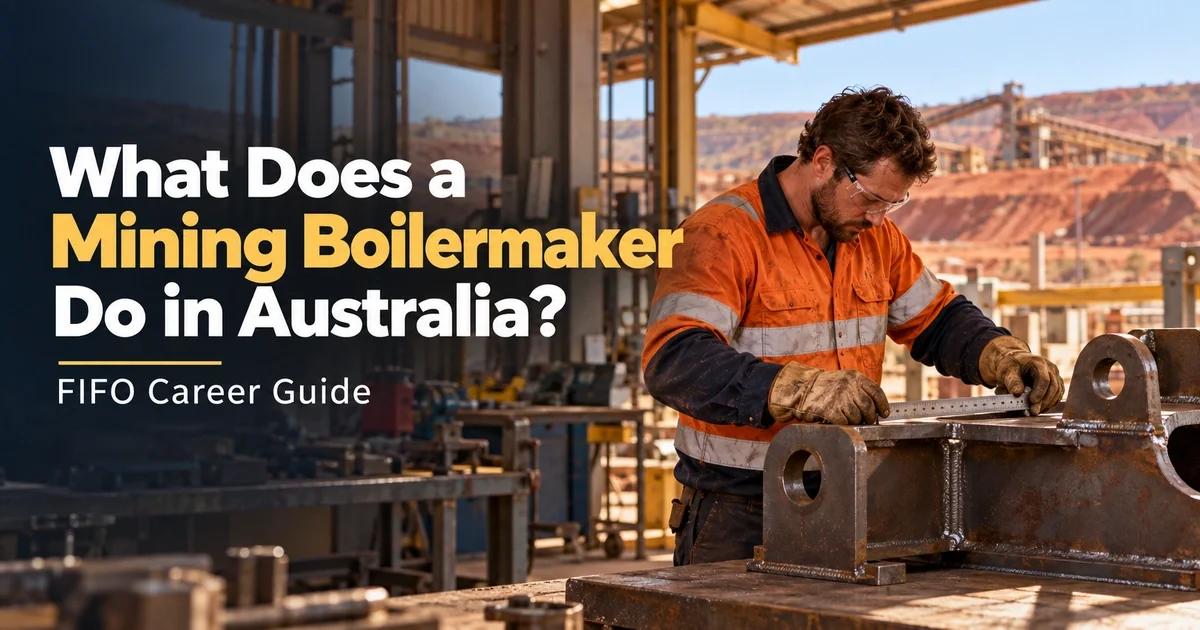
Compare mobile equipment, fixed plant and shutdown boilermaker work, check qualifications and prepare evidence for your next FIFO application.
A dated analysis of 974 live FIFO Careers jobs, including 162 disclosed pay rates, current role examples, roster comparisons and an offer-checking guide.