Updated by
Cooper Hale is the founder and editor of FIFO Careers. Based in Sydney, Australia, and in his thirties, Cooper researches FIFO and remote-site careers across mining and resources, construction, renewables, oil and gas, healthcare and electrical trades. His guides draw on current job advertisements and authoritative Australian sources, including Fair Work Commission agreements, ATO guidance, modern awards and Fair Work Ombudsman resources. He aims to provide practical, carefully sourced information rather than opinion or unverified forum advice.
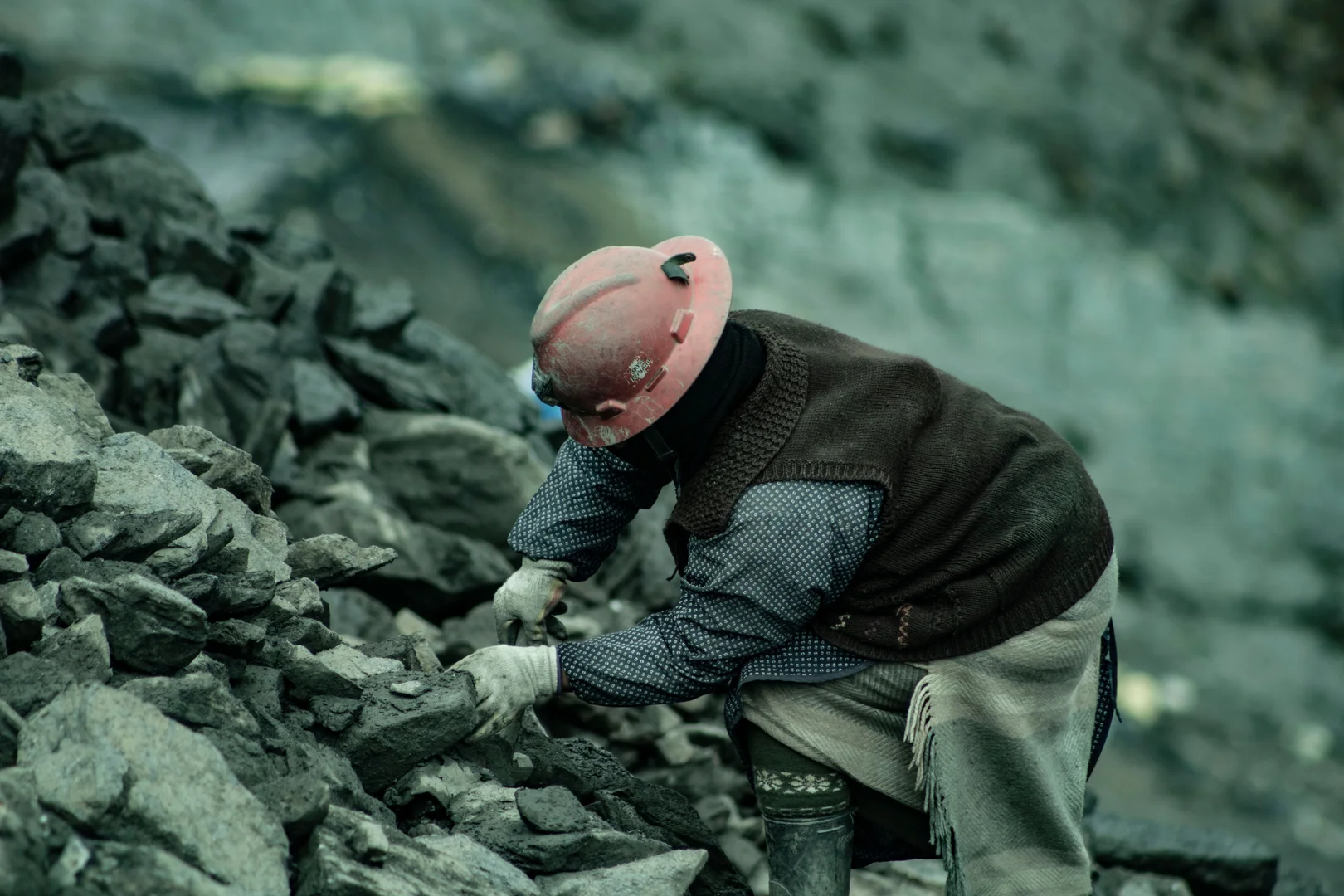
A mining metallurgist helps turn mined ore into a saleable mineral concentrate or metal. They use sampling, laboratory results, plant data and process knowledge to understand how the processing circuit is performing, investigate losses or quality problems, and recommend controlled changes.
The title is broader than one job. A production metallurgist supporting an operating plant, a testwork metallurgist running experiments and a project metallurgist developing a new flowsheet can work on different time horizons and spend their days in different places. Mining metallurgy is also narrower than the full field of materials metallurgy, which can include alloys, casting, welding, heat treatment and manufactured products.
This guide focuses on extractive metallurgy in Australian mining. It explains the main role types, plant and laboratory work, FIFO arrangements, study checks and how to work out what a current vacancy really expects. The advertisement and employer remain the authority for a particular job.
What a mining metallurgist actually does
Jobs and Skills Australia defines metallurgists broadly as professionals who research, develop, control and advise on processes used to extract metals from ores and to process metals and alloys. In mining, the focus is commonly the performance of a mineral-processing or extraction circuit.
A useful way to understand the work is as a repeating decision loop:
- Measure: review representative samples, assays, instrument readings, production data and operating conditions.
- Compare: check recovery, throughput, product quality, reagent or energy use, and other agreed measures against the plan and known constraints.
- Diagnose: identify where material or value may be lost and which explanation is supported by the available evidence.
- Test: use additional sampling, laboratory work, data analysis or a controlled plant trial to test the explanation.
- Change within authority: recommend or implement an approved adjustment with operations and other technical teams.
- Verify and document: confirm the result, record assumptions and limitations, and decide whether further work is needed.
The exact measures and controls depend on the commodity, ore characteristics, flowsheet, equipment, product specification, site procedures and the metallurgist's level of responsibility. A metallurgist does not improve a circuit by changing one number in isolation; a gain in one area may create a loss, cost or risk somewhere else.
Main types of mining metallurgy work
AusIMM's metallurgy career pathway describes a wide field that includes production, hydrometallurgy, pyrometallurgy, geometallurgy, consulting, process engineering and research. In a vacancy, focus on the process and decision the role owns.
| Role family | Main question | Typical work may include | Work setting may lean towards |
|---|---|---|---|
| Production or plant metallurgist | How is the operating circuit performing now, and why? | Sampling plans, daily reconciliation, data review, troubleshooting, trials, reporting and operator support | Processing plant, control room, laboratory and office |
| Testwork or laboratory metallurgist | How does this ore respond under defined test conditions? | Designing tests, supervising sample preparation, analysing results and reporting limitations | Metallurgical laboratory, pilot plant and technical office |
| Project or process metallurgist | Which flowsheet, equipment criteria or operating strategy should a project use? | Testwork programs, mass balances, process design inputs, options studies and commissioning support | Project office, laboratory, vendor facilities and site visits |
| Hydrometallurgist | How can metals be extracted or purified using solution-based processes? | Leaching, solution chemistry, separation, electrowinning or related process work | Plant, laboratory, project or research environment |
| Pyrometallurgist | How should high-temperature processing extract, refine or transform material? | Furnace or thermal-process analysis, testwork, control and improvement | Smelter, refinery, laboratory or project setting |
| Geometallurgist | How will geological variability affect processing performance? | Linking geological, mineralogical and testwork data to predictive processing models | Cross-disciplinary technical office, core/sample facilities and site |
These are general descriptions, not fixed professional boundaries. A role titled “process engineer” may require chemical or process-engineering credentials; a geometallurgy role may require substantial geology, mineralogy, statistics or modelling experience. Read the mandatory criteria rather than assuming the word “metallurgy” makes roles interchangeable.
What can a metallurgist's workday look like?
A site-based day may start with a production meeting and review of the previous shift's tonnes, grades, recovery, product quality and operating issues. The metallurgist may compare plant data with laboratory results and the expected feed, then decide which variance deserves investigation first.
Depending on the plant and role, the day could include:
- checking whether samples, assays and instrument readings are representative and internally consistent
- inspecting part of the processing circuit under the site's access and safety controls
- reviewing feed, intermediate stream, concentrate or tailings results
- discussing ore changes with geologists and mining teams
- planning or supervising testwork with metallurgy technicians or laboratory staff
- working with operators, process control, maintenance and engineering teams on an approved trial
- tracking reagent, water, energy or consumable use where the role requires it
- preparing daily, weekly, monthly or project reports and a clear handover
The Fosterville Gold Mine career guide similarly describes process design and operation, sampling supervision, recovery and quality improvement, waste and cost reduction, operator advice and multidisciplinary communication.
Before applying, ask which part of the flowsheet the role covers, how much time is spent in the plant, laboratory and office, who authorises process changes, and how plant performance is reconciled. Those answers tell you more than the title alone.
Metallurgist versus metallurgy technician
Metallurgists and metallurgy technicians often work together, but the titles should not be treated as automatically equivalent.
A technician role may focus on collecting and preparing samples, completing routine tests, operating laboratory or pilot equipment, recording results and maintaining test or sampling systems. A metallurgist may be expected to design the investigation, interpret several evidence sources, recommend a process response and communicate the technical and operational implications.
The boundary varies by employer and by the person's experience. When reading an advertisement, compare:
- who defines the sampling or testwork program
- who checks and interprets results
- who recommends or approves a plant trial
- who owns formal reporting and reconciliation
- what degree, diploma, certificate or experience is mandatory
- what supervision and development the role provides
Technician experience can be valuable evidence of plant, sampling or laboratory discipline. It does not automatically prove that an applicant has held the design, interpretation or decision responsibility of a professional metallurgist. Describe what you actually did.
Does mining metallurgy always mean FIFO?
No. AusIMM notes that metallurgy work can be residential, FIFO or DIDO, with travel depending on the role. Metallurgists may also work in city project offices, commercial laboratories, pilot plants, research organisations, smelters or refineries.
For a site role, check:
- the point of hire and travel responsibility
- whether the role is FIFO, DIDO or residential
- the roster, shift length and any night-shift or call-out coverage
- whether one metallurgist covers the plant outside normal hours
- the split between plant, laboratory, control-room and office work
- accommodation, site transport and whether the role moves between operations
Do not assume a roster or flights from the company name. If the terms are unfamiliar, compare FIFO, DIDO and BIBO work arrangements before assessing an offer.
How to become a mining metallurgist in Australia
Australian career guides commonly point to tertiary study in metallurgical, chemical or related engineering, or science with a relevant metallurgy focus. The appropriate discipline and level depend on whether the vacancy is plant metallurgy, process engineering, laboratory/testwork, research or another specialist path.
- Define the type of metallurgy you want. Extractive mining, materials engineering, foundry work and welding metallurgy share science but lead to different jobs.
- Compare exact programs and subjects. Look for mineral processing, thermodynamics, process control, chemistry, statistics, laboratory work and design relevant to your intended path.
- Check engineering accreditation where applicable. Engineers Australia publishes a current list and search for accredited engineering programs. Check the exact program, campus, commencement year and status.
- Build evidence during study. Laboratory projects, mass balances, data analysis, design work, vacation placements and site visits can demonstrate method and judgement. Do not rename student work as professional plant responsibility.
- Target the right vacancy level. Graduate metallurgist, metallurgy technician, laboratory and experienced plant roles require different evidence.
- Verify employer and site requirements. Right-to-work evidence, licences, inductions, medical or drug and alcohol screening and mobilisation steps vary by employer, site and jurisdiction.
The NSW Mining metallurgist career card lists science with a metallurgy major or engineering with metallurgical or chemical engineering as common pathways. That is career guidance, not a guarantee that every course qualifies a reader for every vacancy.
Skills that matter beyond process knowledge
Mining metallurgy depends on reliable evidence and careful change control. Useful capabilities include:
- Sampling judgement: understanding whether a result represents the material or process being discussed.
- Mass-balance and data checking: reconciling streams, units, time periods and assumptions before drawing a conclusion.
- Experimental discipline: changing variables deliberately, recording conditions and recognising what a trial can and cannot prove.
- Process thinking: seeing how feed variability, equipment, chemistry, control settings and downstream constraints interact.
- Communication: explaining a finding and its uncertainty to operators, technicians, engineers, geologists and managers.
- Handover and documentation: leaving a traceable record of results, decisions and outstanding risks.
Software and named process packages vary. State your real level of use and explain how you checked an output; do not turn exposure into claimed competence.
How to read a mining-metallurgist job ad
Use these signals to identify the vacancy's real centre of gravity.
| Ad signal | What it changes | What to verify or prepare |
|---|---|---|
| Commodity and product | The ore behaviour, flowsheet and product specification | Whether direct commodity experience is mandatory or preferred; a relevant example without claiming false equivalence |
| Mineral processing, hydro, pyro, refining or materials | The scientific and operating domain | Subjects, projects and work evidence that match the stated process |
| Production, project, testwork, graduate or technician | The decision horizon and expected independence | Examples at the advertised level and clarity about your actual responsibility |
| Named circuit area or equipment | The plant section the role will support | Relevant process understanding and questions about training, operating limits and interfaces |
| Sampling, reconciliation, recovery or optimisation | How performance is measured and improved | A concise example of checking data, testing a cause and verifying an outcome |
| Named software or data systems | How results are analysed and reported | Actual use level, context and how you validated outputs |
| FIFO, DIDO, residential or travel | Living arrangement and plant coverage | Point of hire, roster, nights, call-outs, travel time and accommodation |
On 19 July 2026, FIFO Careers' live search showed metallurgy-technician, mineral-processing, processing-operations, metallurgical-sampling and process-optimisation routes. The broad search also returned unrelated metal-trade roles, which is why the individual category and advertisement should be checked rather than relying on a keyword count.
Is mining metallurgy likely to suit you?
The work may suit you if you enjoy chemistry and process systems, can stay patient with data quality, and want to see whether a technical idea improves a real operation. You need to be comfortable moving between detail and consequence: a sample result only matters if it leads to a defensible decision.
Look more carefully before committing if you only want laboratory research, dislike routine reconciliation and reporting, or are choosing the career solely because you expect a particular FIFO salary or roster. Some roles are plant-heavy and operational; others are project, laboratory or office based.
If you are comparing disciplines, a mining geologist focuses on understanding and modelling the deposit and ore characteristics. A mining metallurgist focuses on how that material behaves through processing and how to recover a saleable product. The roles collaborate, but one is not a substitute for the other.
Your next step
Choose the action that matches your stage:
- Still choosing a course: compare extractive-metallurgy content, laboratories, design projects, industry placements and the exact accreditation record where the program is engineering.
- Student or graduate: read current plant, graduate, laboratory and technician advertisements, then map each important criterion to truthful coursework, project, placement or work evidence.
- Experienced technical candidate: compare the commodity, flowsheet, circuit area, decision responsibility, software and work arrangement with your actual record.
Browse current Mineral Processing jobs on FIFO Careers. Listings change, and not every mineral-processing job is a metallurgist position, so verify the current title and criteria.
When applying, use the FIFO resume guide to connect the advertisement's requirements to specific, accurate evidence.
Related posts
Compare mobile equipment, fixed plant and shutdown boilermaker work, check qualifications and prepare evidence for your next FIFO application.
A dated analysis of 974 live FIFO Careers jobs, including 162 disclosed pay rates, current role examples, roster comparisons and an offer-checking guide.

Compare fixed plant, NPI and underground mining electrician work, then check licences, job requirements, rosters and FIFO fit before applying.